


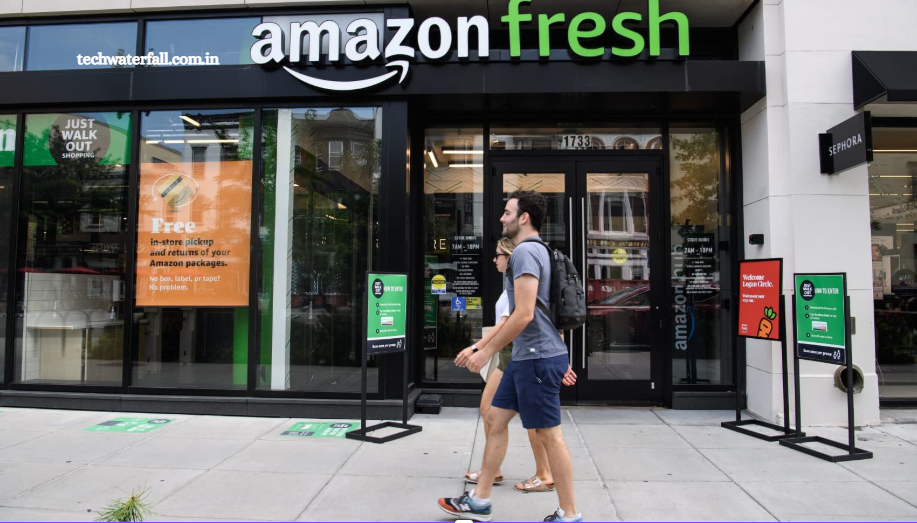
Amazon, the e-commerce giant known for revolutionizing online shopping, has announced plans to close all of its Fresh supermarkets in the U.K. This decision comes as part of the company’s broader strategy to recalibrate its grocery business and focus on areas where it sees the highest potential for growth.
In a blog post published on Tuesday, Amazon revealed that it would be shutting down all 19 of its Fresh stores across the United Kingdom. The company stated that this decision comes “following a thorough evaluation of business operations and the very substantial growth opportunities in online delivery.” Notably, five of the existing Fresh locations are expected to be converted into Whole Foods stores, further consolidating Amazon’s presence in the premium grocery segment.
Read More: Apple Watch Ultra 3 Review: The Land Rover of Smartwatches
A Brief History of Amazon Fresh in the U.K.
Amazon first ventured into the Fresh store concept outside the United States in 2021, opening its initial London location. This launch came about a year after the company introduced the Fresh store format in the Woodland Hills neighborhood of Los Angeles.
Fresh stores were designed to offer consumers a more affordable and accessible grocery shopping experience compared to Whole Foods. While Whole Foods caters to an upscale clientele with a focus on organic and premium products, Fresh stores prioritize mass-market items and everyday essentials, often at lower price points.
Many of these stores also feature Amazon’s innovative cashierless technology, branded as “Just Walk Out.” This system allows customers to shop without waiting in line, automatically charging them as they leave the store—an effort to streamline the shopping experience and merge physical retail with Amazon’s technology-driven approach.
Why Amazon is Pulling Back
The decision to close all U.K. Fresh stores reflects Amazon’s ongoing adjustments in the grocery sector. While the company initially aimed to expand both Fresh stores and Go cashierless stores across the U.S. and U.K., it has slowed this expansion in recent years.
Despite the closure of Fresh supermarkets in the U.K., Amazon continues to operate roughly 500 Whole Foods stores in the U.S., alongside several smaller “daily shop” Whole Foods locations in New York City. These mini stores focus on providing convenient grocery options to urban customers, offering a curated selection of products for quick trips rather than full weekly shopping hauls.
Amazon CEO Andy Jassy has repeatedly highlighted the success of online grocery sales, particularly for “everyday essentials” such as canned goods, paper towels, dish soap, and snacks. During the company’s annual shareholder meeting in May, Jassy emphasized that grocery remains a “significant business” for Amazon and that he is “bullish” on its long-term potential.
What the Closure Means for U.K. Shoppers
For U.K. customers, the closure of Fresh stores means a shift away from physical, budget-focused supermarkets. However, Amazon is not abandoning the grocery market entirely. Instead, the company plans to double down on online grocery delivery.
Starting next year, Amazon intends to offer same-day delivery of groceries in the U.K., including perishable items such as fresh produce, dairy, and meat. This move aligns with a broader trend in the retail industry, where consumers increasingly favor the convenience of online shopping and home delivery over traditional in-store experiences.
By focusing on online grocery sales, Amazon can leverage its existing logistics network and technology to serve customers more efficiently. This strategy also allows the company to reduce the operational costs associated with running brick-and-mortar stores while still capturing a significant share of the grocery market.
The Role of Whole Foods
Interestingly, five Fresh locations in the U.K. will be converted into Whole Foods stores. This move suggests that Amazon sees greater potential in the premium grocery segment within certain urban markets.
Whole Foods, acquired by Amazon in 2017 for $13.7 billion, continues to be a cornerstone of the company’s grocery strategy. By converting Fresh stores into Whole Foods locations, Amazon can maintain a physical retail presence while aligning more closely with its brand identity in higher-margin markets.
Whole Foods stores also integrate seamlessly with Amazon’s technology ecosystem. For example, customers with Amazon Prime can access exclusive discounts, and select locations may feature “Just Walk Out” technology similar to Fresh stores, creating a hybrid shopping experience that blends convenience with premium offerings.
How This Fits Into Amazon’s Global Grocery Strategy
Amazon’s U.K. Fresh closures are part of a larger global recalibration of its grocery ambitions. While physical stores were initially seen as a way to compete with traditional supermarkets and expand Amazon’s footprint, the company has increasingly prioritized digital channels.
In the U.S., Amazon has slowed the expansion of Fresh stores and Go locations, instead focusing on online grocery delivery through Amazon Fresh and Whole Foods. This shift reflects the company’s broader recognition that online delivery can be more scalable and profitable than operating a network of physical stores.
Amazon’s grocery strategy also emphasizes data-driven insights. By analyzing consumer behavior through its online platforms, the company can optimize inventory, pricing, and delivery logistics more efficiently than traditional brick-and-mortar competitors. This advantage allows Amazon to focus on high-demand products and tailor its offerings to specific regional markets, increasing customer satisfaction and loyalty.
Challenges in the Grocery Industry
The grocery sector is notoriously competitive and operates on thin profit margins. Large chains like Tesco, Sainsbury’s, and Aldi dominate the U.K. market, offering established supply chains and loyal customer bases. Competing in this environment requires significant investment in both physical infrastructure and operational efficiency.
Amazon’s decision to close Fresh stores highlights the difficulty of scaling physical grocery operations, particularly when competing against entrenched players with decades of experience. By pivoting to online delivery, Amazon can leverage its technological and logistical strengths without directly competing on every high-street corner.
Future Outlook for Amazon Grocery in the U.K.
With same-day grocery delivery planned for 2026, Amazon is betting on a shift in consumer behavior toward digital convenience. This service will include perishable goods, which have traditionally been a challenge for online grocery providers due to storage, transportation, and freshness concerns.
Amazon’s entry into rapid grocery delivery could reshape the U.K. market, pressuring traditional supermarkets to enhance their own online services. The company’s robust logistics network, combined with its technological innovations, gives it a competitive edge in fulfilling orders quickly and efficiently.
While the closure of Fresh stores marks the end of a physical retail experiment, it signals Amazon’s continued commitment to grocery as a strategic growth area. By combining online convenience, targeted physical presence through Whole Foods, and advanced technology, Amazon aims to dominate the next wave of grocery retail evolution.
Frequently Asked Questions
Why is Amazon closing all Fresh stores in the U.K.?
Amazon is closing its U.K. Fresh stores as part of a strategic shift to focus on online grocery delivery. The company evaluated its business operations and saw greater growth potential in digital channels rather than physical stores.
How many Fresh stores are closing in the U.K.?
All 19 Amazon Fresh stores in the U.K. will be closed.
Will any of the Fresh stores remain open under a different brand?
Yes, five of the Fresh locations will be converted into Whole Foods stores, which offer a more premium grocery experience.
When did Amazon open its first Fresh store in the U.K.?
Amazon opened its first Fresh store outside the U.S. in London in 2021.
How are Fresh stores different from Whole Foods?
Fresh stores focus on mass-market items at lower prices, making everyday groceries more accessible. Whole Foods, on the other hand, is an upscale supermarket chain emphasizing organic, high-quality, and specialty products.
What technology do Fresh stores use?
Many Fresh stores feature Amazon’s “Just Walk Out” cashierless technology, allowing customers to shop without waiting in line. Purchases are automatically charged to their Amazon accounts.
Conclusion
Amazon’s decision to close all Fresh supermarkets in the U.K. reflects a strategic pivot toward online grocery delivery and premium Whole Foods locations. While it marks the end of the company’s budget-focused physical grocery experiment in the U.K., it underscores Amazon’s confidence in its digital grocery model.
With same-day delivery of groceries, including perishables, set to launch next year, Amazon is positioning itself to capture a growing segment of online grocery shoppers. The closures also signal the company’s recognition of operational efficiencies, market realities, and the need to focus on high-potential growth areas.