



Not too long ago, therapy meant cozy offices with soft chairs, tissues at the ready, and a trusted human being across from you. Then, it went digital: first through teletherapy on apps like BetterHelp and Talkspace, then through guided meditations with Headspace and Calm.
Now, the frontier has shifted again. People are increasingly turning to AI-powered mental health companions — no human therapist on the other side, just sophisticated algorithms trained to listen, respond, and even show empathy.
Ten years ago, the thought of sharing your deepest struggles with a machine might have sounded strange, even unsafe. But in 2025, millions are already doing it. The question is no longer if this technology will play a role in mental wellness — it’s how much trust we should give it.
Last updated: July 2025.
What Are AI Mental Health Apps?
AI mental health apps are digital platforms that use natural language processing, deep learning, and machine learning to simulate therapy-like conversations, track moods, and deliver personalized guidance.
Many of these apps borrow techniques from evidence-based practices such as Cognitive Behavioral Therapy (CBT), Acceptance and Commitment Therapy (ACT), and Dialectical Behavioral Therapy (DBT). Others lean into mindfulness, stress monitoring, or even spiritual reflection.
The result is a digital companion that doesn’t just provide content — it talks with you, adapts to you, and in some cases, remembers your emotional patterns over time.
How Big is the AI Mental Health Market?
The global AI mental health market was valued at $1.13 billion in 2023 and is projected to grow at an annual rate of 24% through 2030. With the broader mental health industry valued at $450 billion in 2024, it’s clear AI-driven tools aren’t a niche trend — they’re carving out a central role in the wellness economy.
Startups, venture capitalists, and tech giants alike are rushing to claim their share of this fast-expanding space.
Main Benefits of AI Mental Health Apps
Why are people embracing AI for something as personal as mental health? A few key reasons stand out:
- 24/7 availability: No scheduling, no waiting rooms — support is on-demand.
- Affordability: AI therapy costs a fraction of traditional sessions.
- Consistency: Apps check in daily, helping track progress over time.
- Privacy: For those uncomfortable opening up to a human, anonymity feels safer.
- Personalization: Algorithms adapt to each user’s patterns, tailoring advice and exercises.
Limitations You Shouldn’t Ignore
As promising as they are, AI mental health apps also come with serious caveats:
- Limited evidence: Few have undergone rigorous, long-term clinical trials.
- Transparency gaps: Users rarely know what data trained the AI or whether biases influence its advice.
- Regulation void: Unlike therapists, AI tools aren’t held to strict medical standards.
- Not a substitute for crisis care: Apps can’t handle emergencies like suicidal ideation.
This balance of potential and risk means users must remain informed and cautious.
Top AI Mental Health Apps in 2025
| App Name | Key Features | Best For |
| Wysa | AI emotional support with CBT techniques, hybrid access to human therapists, and mood tracking. | Anxiety Relief & people seeking hybrid AI + human therapist support |
| Youper | Personalized AI therapy with daily mood tracking, built with CBT, ACT, & DBT techniques. | Personalized Support for those wanting self-reflective mental health guidance |
| Calm | AI-curated sleep stories, nature sounds, and cinematic meditations for better sleep and relaxation. | Sleep Support & relaxation-seekers wanting premium, immersive audio experiences |
| Headspace | New AI Mental Health companion, guided meditations and daily mindfulness exercises for mental well-being. | Mindfulness Beginners & those looking for daily meditation support |
| Yuna | Voice-first self-therapy with real-time reflections, breathing exercises, and encrypted privacy. | Talkers, Not Typers — people who prefer to talk it out with AI-led guidance |
| Sonia | Voice & text anxiety support with a 6-week anxiety management program, interactive breathing exercises, and short flexible sessions. | Anxiety Management for people wanting structured, step-by-step guidance |
| Digital Deepak | AI oracle offering spiritual guidance, trained exclusively on Chopra’s teachings with pay-as-you-go access. | Spiritual Seekers & Chopra fans looking for on-demand wisdom from his teachings |
| ChatGPT | AI confidante for emotional support, reflection, and general life advice with 24/7 free access. | Instant Support for people wanting quick reflection, emotional support, or general life advice |
| Neurofit | AI trainer for your nervous system that uses mind-body techniques with real-time stress monitoring and biometric tracking. | Stress Reduction and Nervous System Regulation |
Here’s a closer look at some of the leading AI-driven wellness apps reshaping mental health care:
Wysa: Clinically Validated AI + Human Support
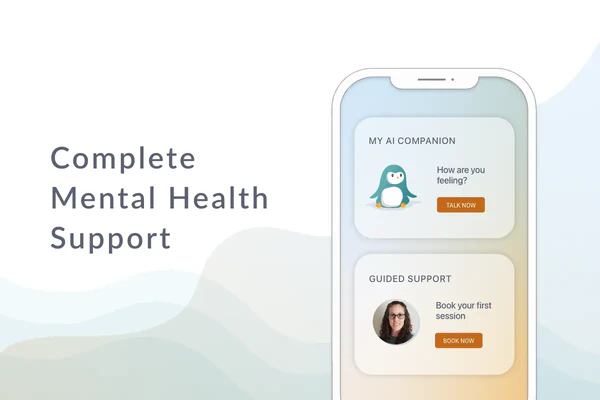
Wysa stands out for its FDA Breakthrough Device Designation, making it one of the few clinically recognized AI mental health tools. It blends AI-driven chat with optional access to licensed therapists, offering a “best of both worlds” approach.
Pros: Clinically validated, strong privacy, hybrid support.
Cons: Premium costs, sometimes templated responses.
Youper: Smart, Personalized Therapy
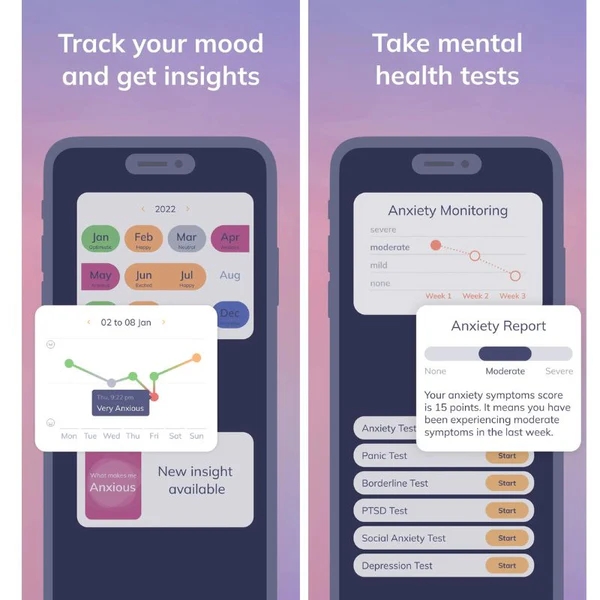
Youper adapts to users over time, learning from daily mood check-ins and reflections. A Stanford study showed 80% of users felt better after consistent use.
Pros: Personalized, clinically backed, intuitive interface.
Cons: Requires consistent engagement, premium features locked behind paywalls.
Calm: Sleep Meets AI
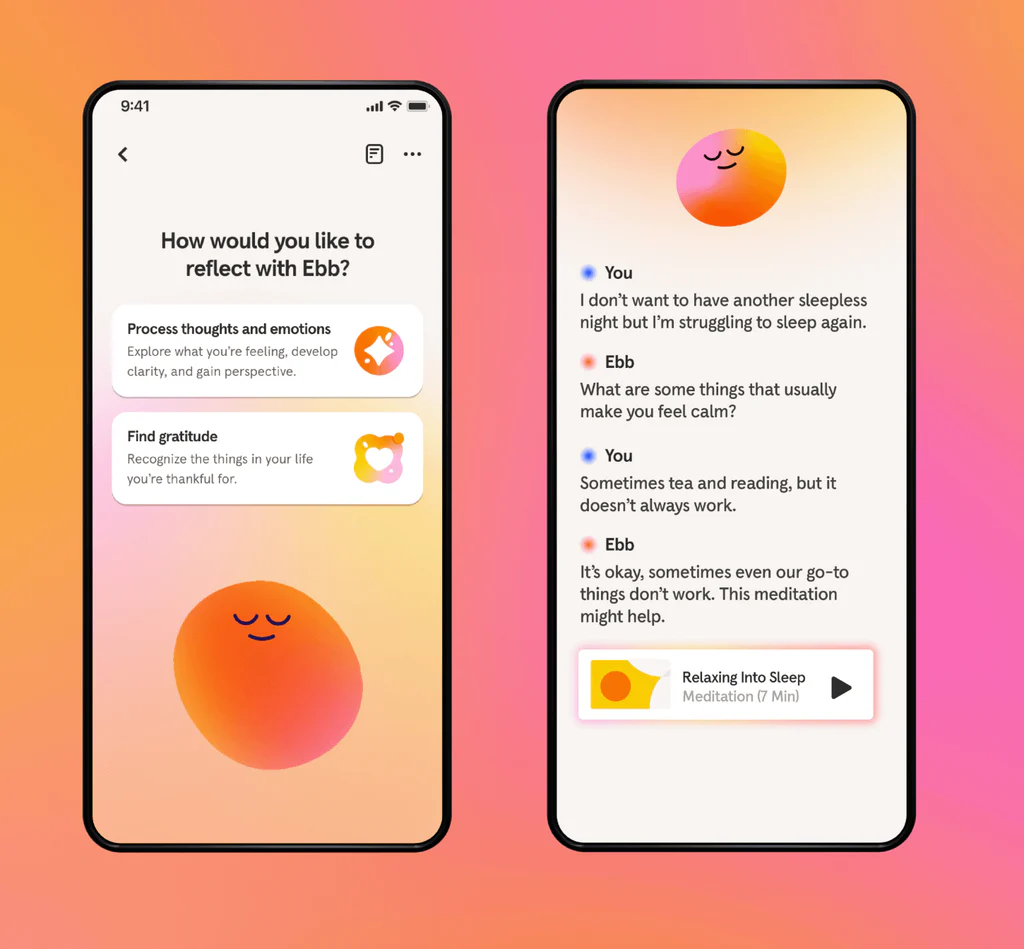
Famous for sleep stories and meditations, Calm now uses AI for smarter recommendations and even AI-generated celebrity-style voices. It’s luxurious, immersive, and focused more on rest than therapy.
Pros: Premium content, soothing voices, expansive library.
Cons: No interactive therapy — relaxation only.
Yuna: Voice-First Self-Therapy
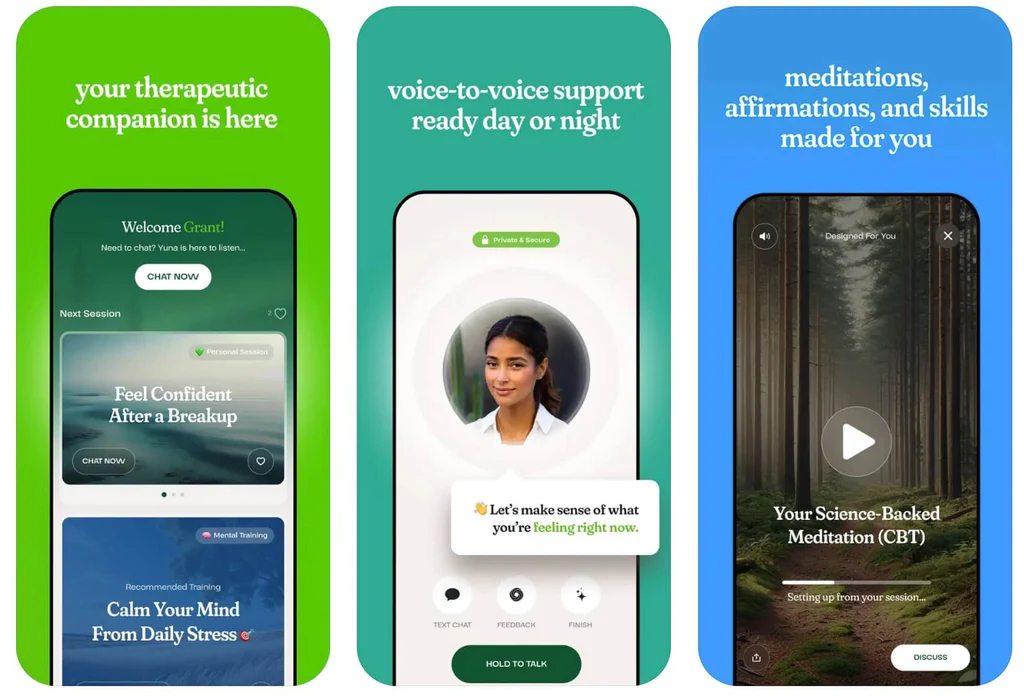
Designed as a voice-first AI companion, Yuna lets users talk through emotions in 30-minute encrypted sessions. It feels more conversational than chatbots but sometimes suffers from technical glitches.
Pros: Natural voice interaction, strong privacy focus.
Cons: Session time limits, occasional freezing.
Sonia: Structured Anxiety Program
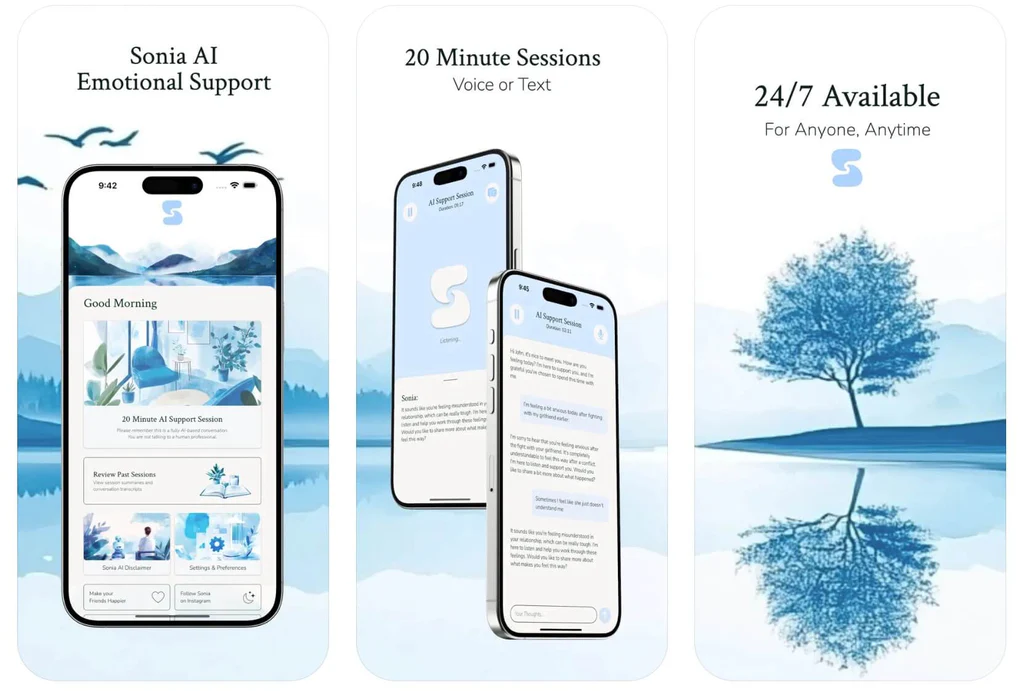
Backed by Y Combinator, Sonia offers voice and text therapy sessions with a six-week anxiety management program. It’s structured but less tested clinically.
Pros: Clear structure, flexible session length.
Cons: Occasional glitches, English-only.
Digital Deepak: Spiritual AI
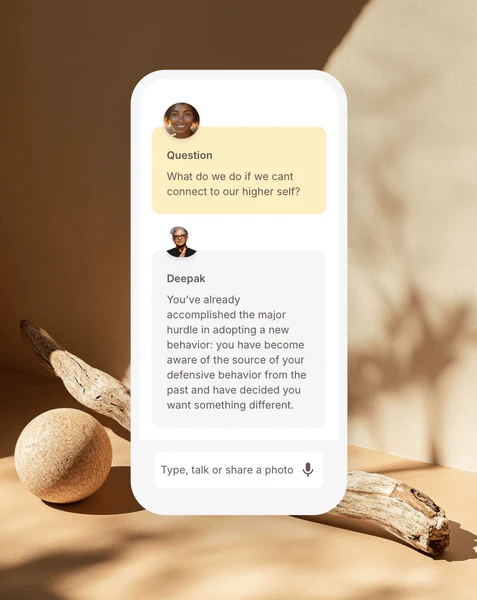
This pay-as-you-go web app draws only on Deepak Chopra’s writings, offering spiritual reflections for $0.50 per 30-minute session. Great for fans of Chopra, but limited in personalization.
ChatGPT: The Ubiquitous Confidante
While not designed specifically for therapy, ChatGPT often acts as a sounding board for reflection and emotional support. It’s widely available and free, but not HIPAA-compliant.
Neurofit: Nervous System Fitness
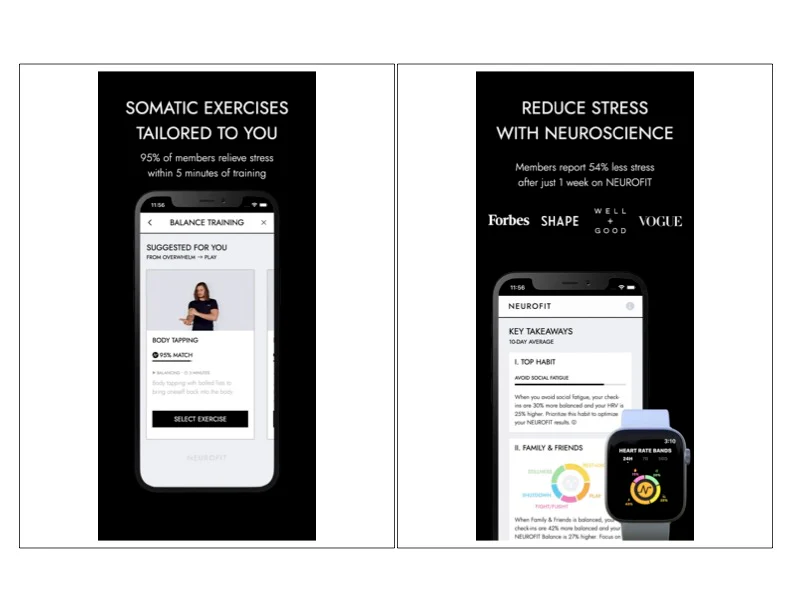
Focused on somatic stress relief, Neurofit uses biometrics and AI coaching to help users regulate their nervous system through movement. Early adopters report stress reduction, though research remains limited.
Pricing Snapshot (2025)
| App Name | Free Trial | Monthly | Annually |
| Headspace | 14 Days | $12.99 | $69.99 |
| Digital Deepak | 7 Days | Currently offers pay-as-you-go access$0.50 for 30 minutes | Not yet |
| Wysa | 1 Month (with a code) | From $19.99 | $99.99 |
| Youper | 7 Days | From $9.99 | $69.99 |
| Calm | 7 Days | $14.99 | $69.99 |
| Yuna | Free limited version | From $8.99 | From $69.99 |
| Sonia | 7 Days | $39.99 | $199.99 |
| ChatGPT | Free access to the base model | $20 | No yet |
| Neurofit | 3 Days | $39.99 every 3 months | $124.99 |
Key Considerations When Choosing an AI Mental Health App
Before committing, ask yourself:
- Privacy: Does the app offer end-to-end encryption? Is data shared with third parties?
- Evidence: Are the methods clinically validated? Does research support the claims?
- Features: Do you need mood tracking, mindfulness, structured programs, or voice chat?
- Emergency care: Does the app provide resources for crisis situations?
- Reviews: What do real users (especially 3- and 4-star reviews) say?
My $0.02: Should You Try One?
AI mental health apps are not replacements for therapy. They can’t diagnose, prescribe, or replace the depth of human connection. But they can make mental health support more accessible, affordable, and immediate.
For someone seeking emotional check-ins, guidance, or stress relief, they may be a powerful addition to a wellness toolkit. For someone in crisis or with complex needs, professional care remains irreplaceable.
The truth is, AI mental health apps are progress, not perfection. They’re part of a larger movement to democratize wellness — and while imperfect, they are undeniably reshaping how we care for our minds in 2025.
Frequently Asked Questions:
Are AI mental health apps a replacement for traditional therapy?
No. AI mental health apps are designed to provide support, reflection, and coping strategies but do not replace licensed therapists or clinical care. They are best used as complementary tools.
Which AI mental health apps are the most clinically validated?
Wysa and Youper currently stand out for their clinical research backing. Wysa has even received FDA Breakthrough Device Designation for its potential to improve treatment access.
How safe are my conversations with AI apps?
It depends on the app. Some, like Yuna, use end-to-end encryption, while others may store and analyze data to improve their models. Always review the privacy policy before use.
Can AI apps help with serious conditions like depression or anxiety?
Some apps (e.g., Sonia for anxiety, Youper for mood tracking) provide structured support, but they are not substitutes for professional psychiatric care. For severe conditions, human therapists remain essential.
Are these apps available globally?
Most apps like Calm, Headspace, and ChatGPT are widely available. However, newer startups like Sonia or Yuna may be limited to English-speaking users or specific regions.
What makes AI mental health apps unique compared to meditation apps?
Meditation apps (like Calm or Headspace) focus primarily on relaxation and mindfulness, while AI mental health apps (like Wysa, Youper, or Yuna) engage in two-way interactions, offering personalized feedback and emotional support.
How much do AI mental health apps typically cost?
Prices vary from free (ChatGPT base model) to $8–$20 per month for most subscriptions. Some, like Digital Deepak, operate on a pay-as-you-go model.
Conclusion
The rise of AI mental health apps in 2025 marks a powerful shift in how we nurture emotional well-being. From mindfulness and meditation platforms to AI-driven companions that listen, guide, and support, these tools bring peace, strength, and clarity into daily life. While they cannot replace human therapists, they offer accessible, round-the-clock help for stress, anxiety, and self-reflection. By embracing the right app for your needs, you can unlock a healthier mind and a more balanced life—one conversation at a time.
