


Elevate your photography and videography with drones designed for professional performance. Whether you’re capturing cinematic landscapes, real estate imagery, or industrial inspections, the right drone can transform your work. In 2025, the market offers a range of powerful drones that combine image quality, flight performance, intelligent features, and value. Here’s a curated list of the top 7 professional drones, along with practical insights to help you optimize your workflow.
Read More: Revolutionary and Genius Ways to Supercharge Your Phone: Cutting-Edge Charging Innovations in 2025
DJI Mavic 3 Pro
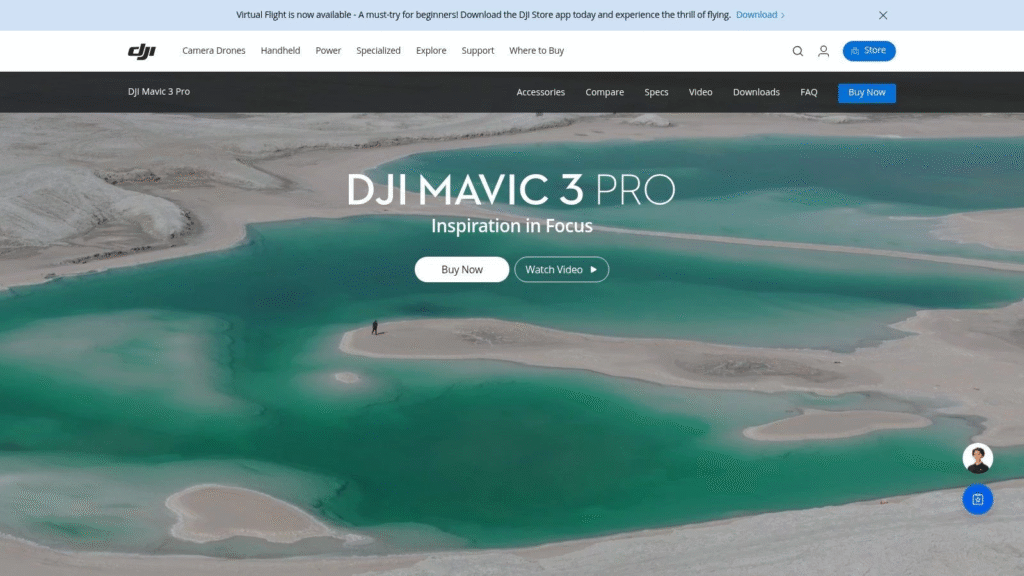
The DJI Mavic 3 Pro is the ultimate tool for professional aerial photography. Its Hasselblad-branded triple-camera system delivers exceptional versatility, allowing seamless switching between wide (24mm), medium (70mm), and telephoto (166mm) lenses mid-flight. This makes it perfect for landscapes, cinematic storytelling, or detailed inspections without multiple flights.
The primary 4/3 CMOS camera captures 5.1K video at 50fps and 4K at 120fps, delivering stunning dynamic range and slow-motion capabilities. The medium and tele lenses expand creative possibilities for cinematic shots or distant subjects. Its 43-minute flight time and APAS 5.0 omnidirectional obstacle sensing ensure extended, safe operations in complex environments.
Pros: Exceptional image quality, versatile focal lengths, long flight time, advanced safety features.
Cons: High price (~$2,199+), larger size reduces portability, steep learning curve.
Sony Airpeak S1
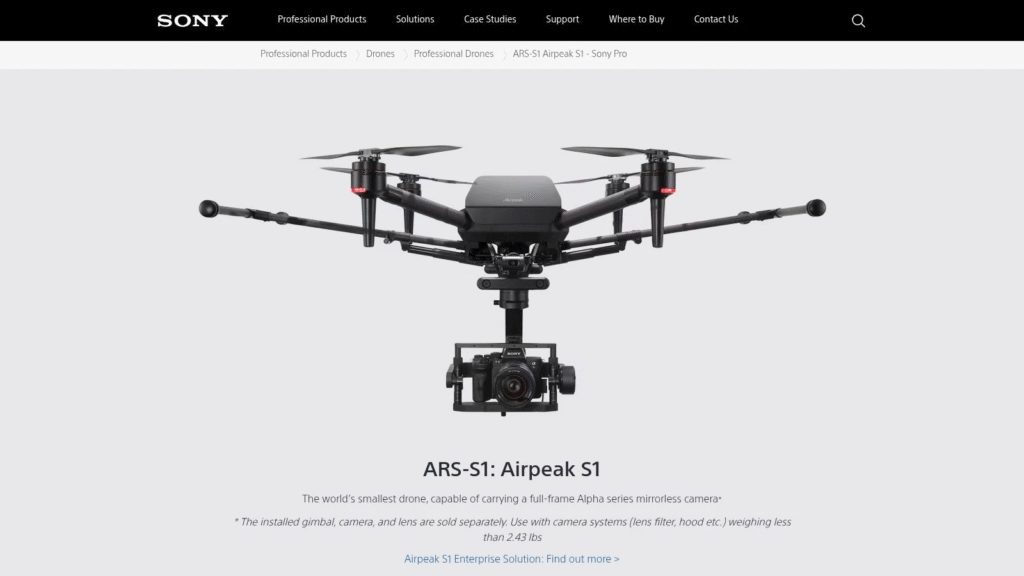
Designed for cinematic professionals, the Sony Airpeak S1 can carry a full-size Sony Alpha mirrorless camera, enabling unmatched image quality. Its robust design and powerful motors handle winds up to 44.7 mph and speeds up to 55.9 mph, providing stability in challenging conditions.
The dual-operator mode allows one person to pilot while another controls camera pan, tilt, zoom, and focus, ideal for professional film crews. While its flight time reduces to 12 minutes with a camera payload, the S1 delivers precision and control unmatched by many competitors.
Pros: Exceptional image quality, stable in high winds, modular design, seamless Sony ecosystem integration.
Cons: Expensive (~$9,000+), reduced flight time with payload, requires expertise.
DJI Inspire 3
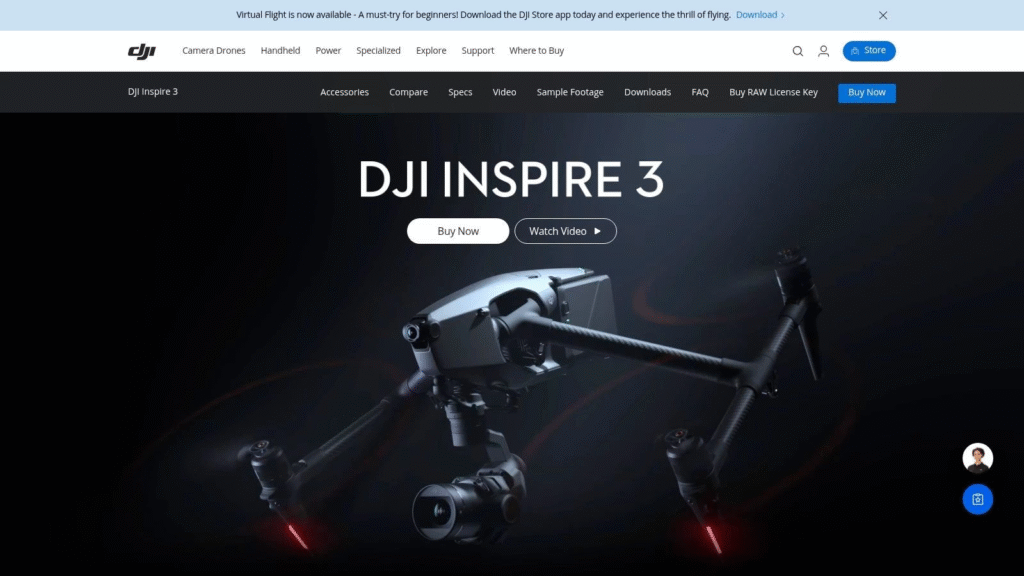
For high-end cinematography, the DJI Inspire 3 offers a carbon fiber frame paired with the Zenmuse X9-8K Air gimbal, recording 8K video at 75fps and 8K RAW stills. The interchangeable lens system (DL/E mount) provides maximum flexibility for diverse shooting scenarios, from wide landscapes to tight telephoto shots.
Its dual-operator system allows one pilot to fly while another controls the camera, achieving complex cinematic shots with ease. Advanced obstacle sensing, O3 Pro transmission up to 15km, and cinema-grade color profiles make this drone ideal for professional film productions.
Pros: Cinema-grade quality, versatile lenses, dual-operator system, extended transmission.
Cons: Very high price (~$16,500), bulky, requires training and additional accessories.
Autel Robotics EVO II Pro V3
The Autel EVO II Pro V3 balances performance and versatility. Its 1-inch CMOS sensor with adjustable aperture (f/2.8–f/11) captures high-resolution images and 6K video, offering depth-of-field control and excellent low-light performance.
With 40-minute flight time and 19-sensor omnidirectional obstacle avoidance, it’s ideal for real estate, film, industrial inspections, and commercial services. Its flexible geo-fencing policy allows operation in areas restricted for other drones.
Pros: Excellent image quality, long flight, reliable obstacle avoidance, flexible regulations.
Cons: Slightly larger, app experience less refined than DJI, premium price (~$1,999).
Skydio 2+
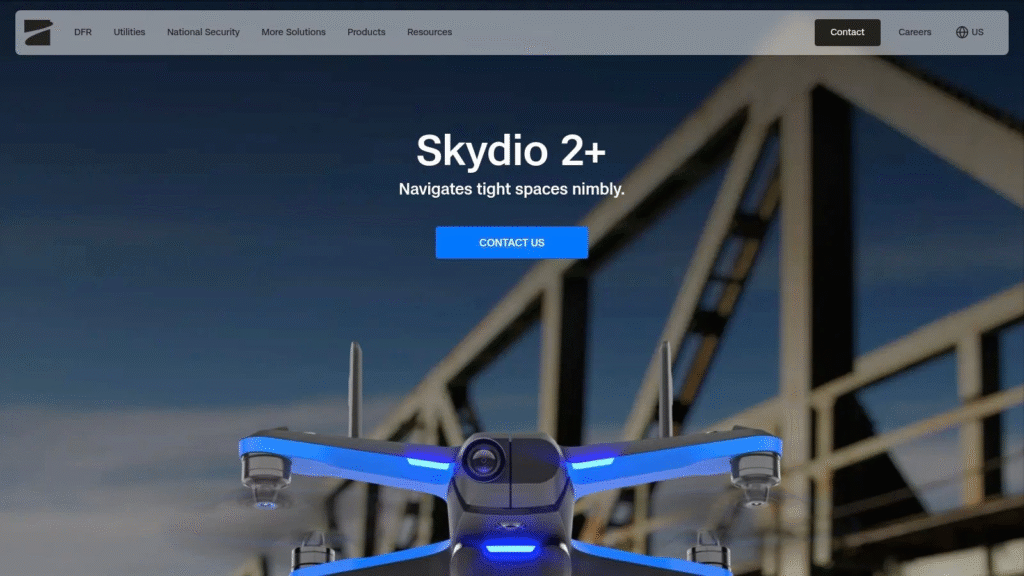
The Skydio 2+ focuses on autonomous intelligence rather than sheer sensor size, excelling in obstacle-heavy environments and solo-operator situations. Its six 4K navigation cameras build a 360° 3D map for precise flight and subject tracking, making it ideal for sports, inspections, or industrial filming.
Its KeyFrame feature enables pre-planned cinematic sequences, while 27-minute flight time and 4K/60fps HDR recording ensure high-quality results. Although image quality doesn’t match larger sensor drones, Skydio 2+ excels in efficiency, safety, and dynamic shooting.
Pros: Advanced autonomy, obstacle avoidance, ideal for solo operations.
Cons: Moderate image quality, 3.5km range, limited manual camera control.
DJI Air 3
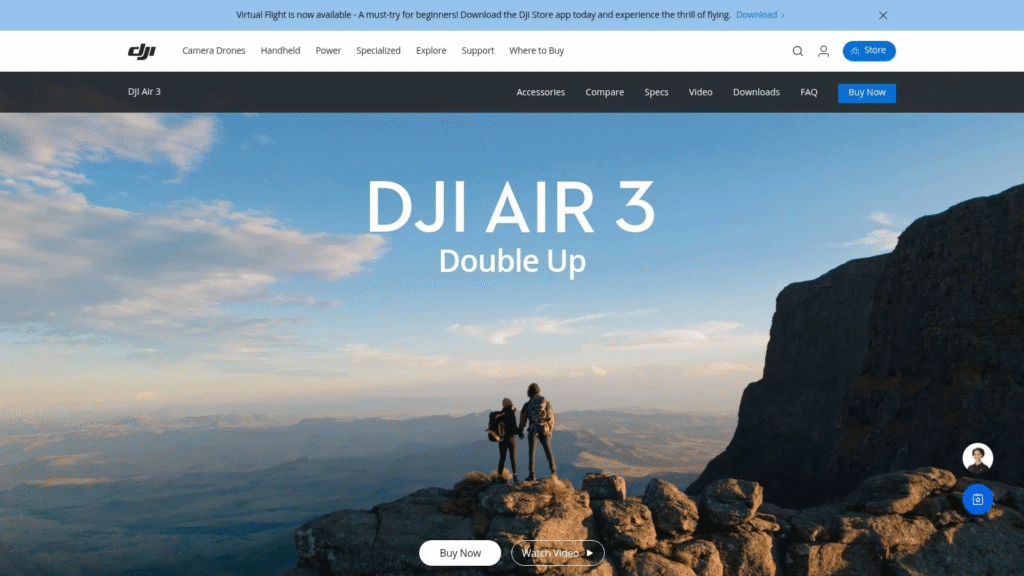
The DJI Air 3 offers an excellent balance of portability, performance, and affordability. Its dual-camera system combines a 24mm wide-angle and 70mm medium telephoto lens, enabling diverse perspectives without changing equipment.
The 1/1.3-inch CMOS sensors capture 48MP stills and 4K/60fps video with a 10-bit D-Log M color profile, supporting professional post-production workflows. With 46-minute flight time and O3 video transmission up to 20km, it suits real estate photography, commercial projects, and enterprise inspections.
Pros: Versatile imaging, long flight, portable, affordable (~$1,099).
Cons: Smaller sensor than high-end drones, no adjustable aperture, limited robustness in strong winds.
Freefly Astro
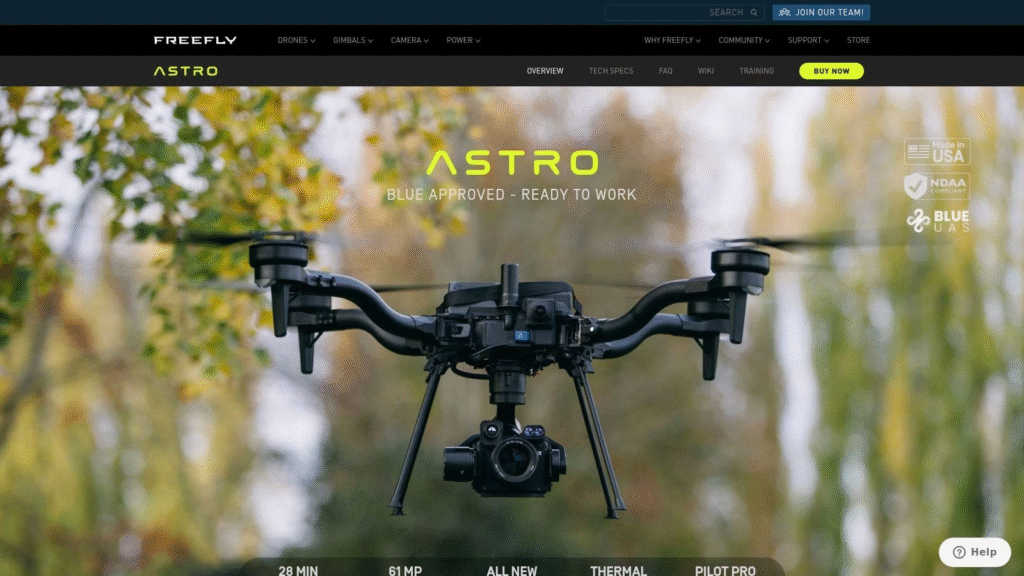
The Freefly Astro is designed for high-end cinema applications. Its top-mounted camera design eliminates propellers from shots, supporting heavy payloads up to 5 pounds, including RED Komodo or Sony FX3 cameras. Carbon fiber construction ensures durability and stability for complex camera movements.
Unlike consumer drones, the Astro emphasizes manual control, giving skilled operators precision for cinematic sequences. Its modular design allows integration with various gimbals and cameras, making it perfect for film, commercials, and high-end production environments.
Pros: Propeller-free camera view, exceptional stability, cinema-grade payload capacity, modular design.
Cons: Very high price (~$14,995), requires expertise, limited autonomy, large size reduces portability.
Comparison of Top 7 Professional Drones
| Drone Model | Core Features ★ | User Experience & Safety ✨ | Value & Pricing 💰 | Target Audience 👥 | Unique Selling Points 🏆 |
|---|---|---|---|---|---|
| DJI Mavic 3 Pro | Folding design; Hasselblad triple-camera; 43-min flight | Advanced obstacle sensing; versatile imaging | High price ($2,199+) | Pro photographers/videographers | Revolutionary Hasselblad system |
| Sony Airpeak S1 | Full-size Sony Alpha compatibility; Dual operation mode | Excellent stability in high winds; robust performance | Premium price (~$9,000+) | Cinematography production teams | Unmatched image quality with Sony ecosystem |
| DJI Inspire 3 | Zenmuse X9-8K Air; 8K video; Dual-operator system; 28-min flight | Professional dual control; rugged, cinema-grade build | Premium kit (~$16,500) | Professional filmmakers | 8K cinematic quality; versatile lens mount |
| Autel Robotics EVO II Pro V3 | 1-inch CMOS sensor; 6K video; 40-min flight | Comprehensive obstacle avoidance; stable flight performance | Fair premium ($1,999) | Pro operators needing extended flight | Adjustable aperture; flexible geo-fencing policy |
| Skydio 2+ | AI-powered autonomy; Six 4K cameras; 27-min flight | Minimal pilot input; safe autonomous navigation | Competitive ($1,099+) | Solo creators & independent shooters | Unmatched autonomous flight & subject tracking |
| DJI Air 3 | Dual-camera system (24mm wide, 70mm tele); 48MP imagery; 46-min flight | Intuitive design; long flight in a compact form | Affordable ($1,099) | Entry-level professionals | Versatile imaging with portability |
| Freefly Astro | Top-mounted camera; 5lb payload capacity; 30-min flight; Carbon fiber construction | High stability; precision flight control for cinematic demands | Premium cinema (~$14,995+) | High-end film production teams | Eliminates propellers in frame; customizable modular design |
Streamline Your Drone Operations
Choosing the right drone depends on your project needs, workflow, and budget. Solo real estate photographers, industrial surveyors, and large film teams each require different features—ranging from long flight times to advanced camera systems.
Effective drone management includes pre-flight planning, team coordination, regulatory compliance, and post-flight data processing. Platforms like Dronedesk can streamline operations, integrate fleet management, and improve collaboration, letting you focus on capturing breathtaking aerial content.
Invest in the right drone, optimize your workflow, and elevate your photography and videography business to new professional heights in 2025.
Frequently Asked Questions:
What is the best drone for professional photography in 2025?
The best drone depends on your specific needs. For cinematic quality, the DJI Inspire 3 or Sony Airpeak S1 excel, while the DJI Mavic 3 Pro and Autel EVO II Pro V3 offer versatile options for landscapes, real estate, and inspections.
How much do professional drones cost?
Prices range widely: entry-level professional drones like DJI Air 3 and Skydio 2+ start around $1,099, mid-range options like DJI Mavic 3 Pro cost about $2,199+, while high-end cinematography drones like DJI Inspire 3 or Freefly Astro can exceed $15,000.
Which drone offers the longest flight time?
The DJI Mavic 3 Pro provides up to 43 minutes, DJI Air 3 offers 46 minutes, and Autel EVO II Pro V3 offers up to 40 minutes. Flight times vary depending on payload and environmental conditions.
Are these drones suitable for beginners?
Some models, like DJI Air 3 and Skydio 2+, are more beginner-friendly with intuitive controls and automated flight features. High-end drones such as the Inspire 3, Freefly Astro, and Sony Airpeak S1 require professional experience or dual-operator teams.
What features should I prioritize for professional drone photography?
Key features include camera sensor size, video resolution (4K–8K), flight time, obstacle avoidance, stability in wind, lens versatility, autonomous flight modes, and dual-operator capability for complex shoots.
Can these drones be used for commercial projects?
Yes. Most drones listed are suitable for real estate, film production, industrial inspections, and enterprise applications, depending on payload capacity and camera options.
How do autonomous drones like Skydio 2+ compare to traditional drones?
Autonomous drones excel in obstacle-dense environments and solo operations, using AI to track subjects and navigate safely. Traditional drones, like DJI Inspire 3 or Mavic 3 Pro, provide higher image quality and manual control for precise cinematography.
Conclusion
Choosing the right drone is essential for capturing breathtaking aerial imagery and elevating your professional photography or cinematography. From the versatile DJI Mavic 3 Pro and Autel EVO II Pro V3 to the cinema-grade DJI Inspire 3 and Freefly Astro, each drone offers unique strengths tailored to different workflows, budgets, and creative goals. Whether you prioritize image quality, autonomous flight, or dual-operator precision, understanding your specific needs ensures you select the perfect tool for your projects.
