


Cutting Edge innovation___Debates often ignite around one fascinating question—are foldable phones the future of mobile technology? The growing buzz mirrors the rise of groundbreaking models introduced by major tech giants. Foldable smartphones promise not only futuristic designs but also a new way of interacting with digital devices. This article takes a deep dive into foldable phones, comparing them with traditional smartphones, highlighting their unique advantages, and showcasing how they might redefine the mobile landscape.
Read More: Capture Every Emotion: Ultimate Camera Phones That Powerfully Redefine Photography in 2025
What Is a Foldable Phone?
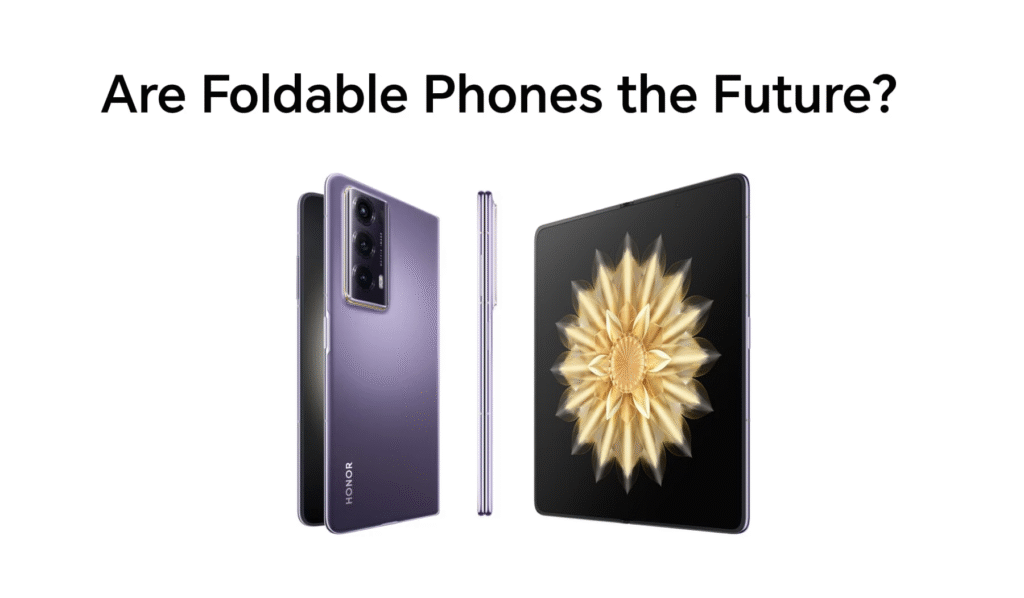
A foldable phone is an advanced smartphone designed with flexible displays that bend or unfold without damage. This design offers a rare balance: the compact convenience of a standard phone and the expansive usability of a tablet-like screen.
Unlike traditional smartphones that rely on rigid glass, foldables use ultra-thin glass or durable polymers that bend seamlessly. This breakthrough results from years of research in materials science and manufacturing. With their transformative form, foldables offer users an experience that shifts with their needs—compact in one moment, immersive the next.
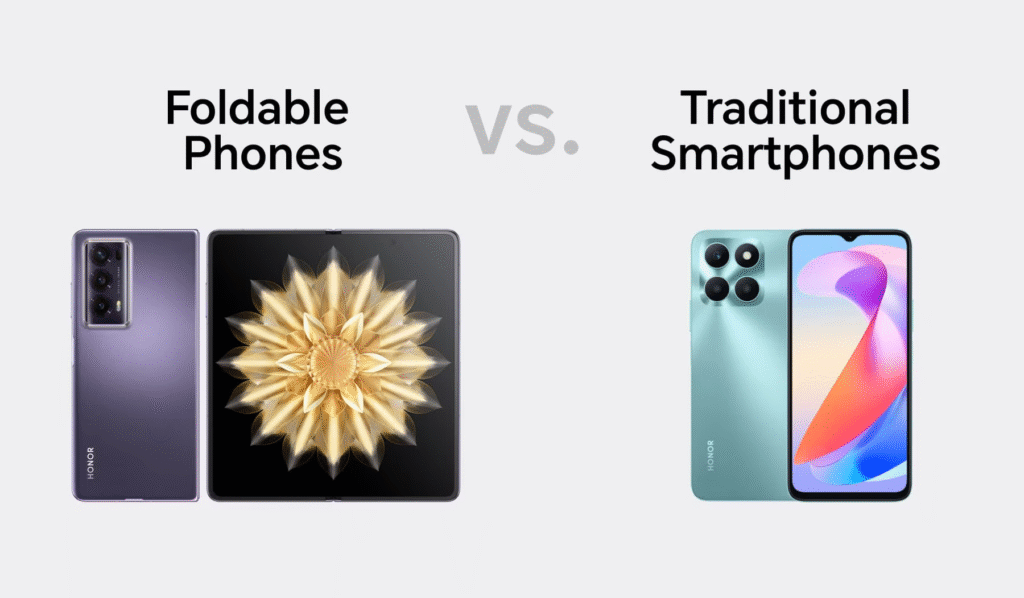
Foldable Phones vs. Traditional Smartphones
Productivity
Foldable phones shine in productivity. Their larger, expandable screens make multitasking more efficient—running multiple apps side by side, editing photos, or reviewing documents feels more natural. Traditional smartphones, despite powerful processors, remain limited by fixed, smaller screens.
Portability
Portability is a balancing act. Foldable devices compress into compact forms despite offering larger displays. However, traditional smartphones remain slimmer and lighter, making them more pocket-friendly. Users must choose between streamlined simplicity and adaptive versatility.
Durability
Durability remains a challenge for foldables. Constant folding, hinge mechanisms, and exposure to dust can affect long-term resilience. By contrast, traditional smartphones have benefited from years of refinement, boasting water resistance, dust-proofing, and sturdier builds. Yet, as technology matures, foldables are catching up with reinforced hinges and improved protective layers.
User Experience
User experience separates the two categories. Foldables deliver a futuristic edge—whether for immersive streaming, console-like gaming, or innovative app layouts. Traditional smartphones, on the other hand, provide stability, reliability, and familiarity backed by years of optimized design. Both approaches cater to different user expectations, but foldables add excitement to the daily smartphone experience.
Unique Advantages of Foldable Phones
Foldable phones go beyond novelty. They bring practical and powerful benefits that traditional smartphones cannot match:
- Adaptive Form Factor – Seamlessly transition from a pocket-sized phone to a tablet-like screen for expanded use.
- Multitasking Power – Run multiple apps simultaneously with ease, boosting efficiency for professionals and students alike.
- Immersive Entertainment – Enjoy films, shows, and media on expansive displays designed for stunning clarity.
- Enhanced Gaming – Larger screens provide a console-like gaming experience for mobile gamers.
- Camera Innovation – Some foldables use the same powerful camera system for selfies and video calls, raising photo quality.
- Futuristic Appeal – Beyond performance, foldable phones look sleek, modern, and eye-catching, offering users a status symbol in innovation.
Spotlight: HONOR Magic V2
Among the newest innovations, the HONOR Magic V2 stands as a strong example of foldable excellence. Crafted with both function and elegance in mind, it represents the cutting edge of mobile design.
- Dimensions: 156.7 mm tall, 74.0 mm wide folded, and 145.4 mm wide unfolded. Depth ranges between 9.9 mm and 4.7 mm (PU version) or 10.1 mm and 4.8 mm (Glass version).
- Displays: Dual OLED screens—7.92-inch inner and 6.43-inch external—both supporting 120 Hz refresh rates and over 1 billion colors.
- Performance: Powered by Snapdragon 8 Gen 2 with an Adreno 740 GPU and 16 GB RAM.
- Software: Runs MagicOS 7.2 based on Android 13 for smooth, responsive interaction.
This combination of power, portability, and design makes the Magic V2 a leader in the foldable market.
The Road Ahead for Foldable Phones
The rise of foldable technology reflects a larger trend: consumers demand devices that adapt to their lifestyle rather than the other way around. While challenges around durability, price, and app optimization remain, the industry is moving quickly to address them. With each new model, foldables are becoming slimmer, sturdier, and more affordable.
Tech giants are investing billions in this category, signaling that foldables are not just an experiment—they’re a cornerstone of the mobile future. For professionals, students, gamers, and media enthusiasts, foldables promise unmatched versatility.
Frequently Asked Questions:
What makes foldable phones different from regular smartphones?
Foldable phones feature flexible displays that can bend or unfold, offering both compact portability and a larger, tablet-like screen when needed. Traditional smartphones have rigid displays with fixed screen sizes.
Are foldable phones durable?
Durability has improved significantly with reinforced hinges, stronger materials, and better protective coatings. While traditional smartphones remain more rugged, newer foldable models are engineered for long-term use.
Do foldable phones improve productivity?
Yes. Their larger screens allow for multitasking, such as running multiple apps, editing documents, or watching content while working—making them ideal for professionals and power users.
Are foldable phones worth the price?
Foldable phones are more expensive due to advanced technology and premium designs. For users who value multitasking, immersive entertainment, and cutting-edge design, they can be worth the investment.
Which companies make the best foldable phones?
Leading brands such as Samsung, HONOR, Huawei, and Motorola are driving the foldable revolution, each offering models with unique strengths in design, performance, and innovation.
Do foldable phones support gaming and media better?
Absolutely. Their expanded displays enhance gaming visuals, video streaming, and reading, creating a more immersive experience compared to standard smartphones.
What challenges do foldable phones still face?
Key challenges include high costs, hinge durability, and optimizing apps for foldable screens. However, rapid innovation is addressing these issues with each new generation.
Conclusion
Foldable phones represent more than a design experiment—they mark a turning point in mobile innovation. By merging portability with expansive screen space, they deliver an experience that bridges the gap between smartphones and tablets. Their strengths in multitasking, immersive entertainment, and futuristic design make them one of the most exciting advancements in recent years.
