


New smartphones launch every few months, fueling debates among consumers about whether to switch platforms. But beyond personal preference, there’s a deeper story. Businesses, app developers, and decision-makers can learn a lot by studying not just the pros and cons of devices, but also the unique behaviors and demographics of iOS and Android users.
This article explores the critical differences between iPhone and Android users, their spending patterns, loyalty, and preferences. It also highlights strategic insights for businesses choosing between iOS and Android when developing apps in 2025.
Read More: How Mobile Technology is Powerfully Transforming Healthcare and Saving Lives in 2025
Android vs iOS: Market Share and Growth
Android and iOS dominate the global smartphone market. As of late 2023, Android holds about 70% global market share, while iOS sits at 29%. In Europe, the split is similar: Android at 67% and iOS at 32%.
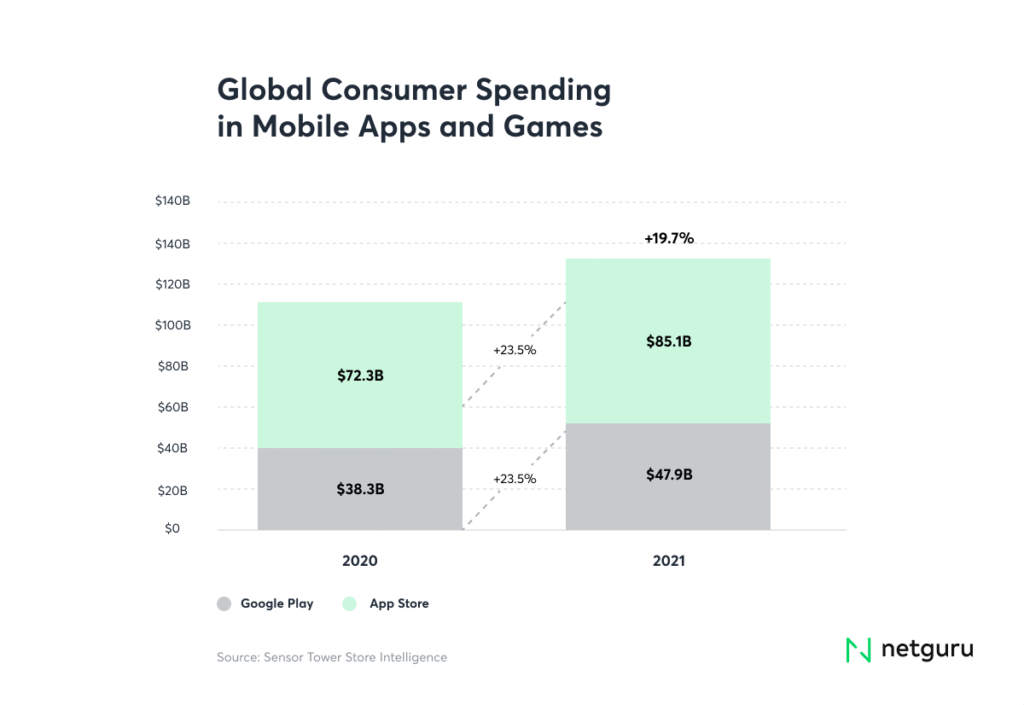
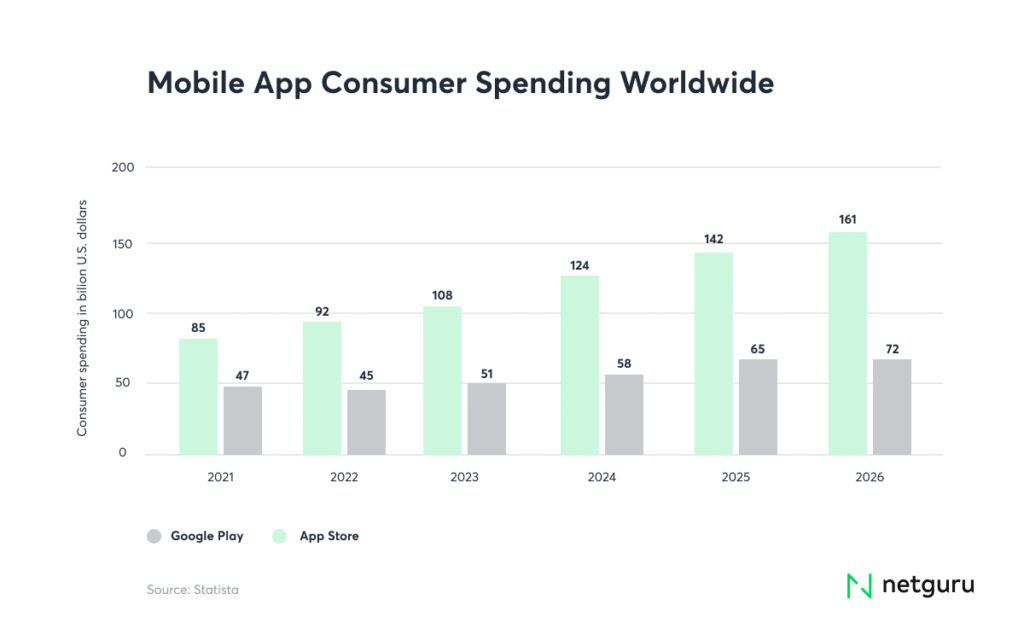
The Google Play Store hosts around 3.55 million apps, compared to the 1.6 million apps available on Apple’s App Store. Yet despite Android’s larger user base and app count, iOS leads in global app revenue. In the first half of 2022, iOS users spent $43.7 billion on apps—double the $21.3 billion spent on Google Play.
This spending gap underscores why many businesses prioritize iOS for premium apps while leveraging Android’s scale for broader reach.
Why iOS Leads in the US While Android Dominates Globally
In 2022, iPhones overtook Android devices in the US for the first time since their launch in 2007. Apple now commands more than 50% of the US market share, thanks to strong loyalty and shifting trends.
Globally, Android wins because of affordability and variety. Multiple brands—Samsung, Motorola, Google, Xiaomi, and more—offer Android phones across every price point, from budget-friendly to premium models.
In contrast, Apple thrives in the US due to:
- Cultural influence: Apple is an American company and its products have become pop culture staples.
- Perceived security: US consumers trust Apple’s claims of stronger privacy protections.
- Economics: US buyers are less price-sensitive and value Apple’s strong resale value for trade-ins.
Ultimately, Apple enjoys the highest satisfaction and loyalty ratings in the US, edging out Samsung and Google with only a slim margin.
Hardware and Software: What Sets Them Apart
The differences between iOS and Android start with the devices themselves:
- Device variety: Android users can choose from hundreds of models with different screen sizes, features, and prices. iPhone users are limited to Apple’s lineup.
- Navigation: Many Android phones still include physical buttons, while iPhones rely entirely on touch-based navigation.
- Customization: Android offers deep personalization—users can rearrange home screens, widgets, and themes. iOS users work within a simpler, more structured grid.
- App approval: Apple’s App Store has stricter review processes, resulting in fewer low-quality apps. However, approvals take longer compared to Google Play.
For businesses, this means Android provides flexibility and scale, while iOS ensures a polished and premium ecosystem.
iPhone vs Android Users: Demographics and Behaviors
The differences between platforms go beyond hardware. User demographics and behaviors shape how people interact with apps and services.
Income and Spending
iPhone users generally earn more. A 2024 Slickdeals survey showed iPhone users reporting $53,251 average income, compared to $37,040 for Android users.
iOS users spend more on clothing, beauty, and tech. They also drive higher in-app purchase revenue: $1 per app compared to $0.47 per app for Android users.
Age Groups
Younger consumers (18–29) prefer iPhones, with 44% using iOS compared to 30% on Android.
Older generations lean toward Android, likely due to affordability and broader device options.
Loyalty and Switching
Android retains 91% of users, slightly higher than iOS at 86%.
People switch platforms for better user experience, features, or pricing. About 29% moved from iOS to Android for affordability, while 14% switched from Android to iOS for a better experience.
Security Perceptions
Apple users feel safer. In one survey, 75% of iOS users fully recovered data after security breaches, versus only 55% of Android users.
However, experts note that both platforms have strengths and weaknesses depending on the type of threat.
Engagement with Notifications
Android users engage more with push notifications, with a 4.6% reaction rate, compared to 3.4% for iOS.
Android also has a higher opt-in rate (81% vs. 51%), largely because iOS requires explicit user consent.
AI Integration: Apple vs Google
Artificial intelligence is reshaping mobile experiences. Both Apple and Google have invested heavily in AI-powered features:
Apple’s AI focus centers on privacy and local processing. Features like Siri, Apple Intelligence, and Core ML aim to keep data secure on-device.
Google’s AI focus leans toward personalization, cloud-driven services, and predictive suggestions. Android users often benefit from smarter search, voice recognition, and real-time translation.
For developers, AI integration is becoming a key differentiator, with Apple emphasizing security and Google emphasizing versatility.
App Store vs Google Play: Revenue and Preferences
The app ecosystems reveal striking contrasts:
- App Store revenue in 2023: $85.1 billion
- Google Play revenue in 2023: $47.9 billion
iOS users spend more on:
- Games (76% of revenue)
- Productivity apps (e.g., Microsoft Office, Google Drive)
- Social media (Facebook, Instagram)
- Android users prefer:
- Games (31.8% of revenue)
- Education apps (language learning, e-learning)
- Food & drink apps (recipe finders, restaurant locators)
For developers, iOS is better for monetization, while Android excels at reach and engagement.
Key Considerations for Businesses Choosing a Platform
When developing apps, businesses must weigh their options carefully:
Target Market
- In high-income markets like the US, UK, and Japan, iOS dominates.
- In emerging markets, Android’s affordability makes it the smarter choice.
Hardware Options
- iOS is limited to Apple’s premium devices.
- Android spans budget, mid-range, and luxury models across multiple brands.
Development Costs and Time
- Android development often requires expertise in Java, Kotlin, or C++, while iOS relies on Swift or Objective-C.
- iOS developers tend to earn slightly more, especially in the US.
- Cross-platform tools (like Kotlin Multiplatform or Flutter) can save costs and accelerate development.
Revenue Strategy
- If the app relies on in-app purchases or subscriptions, iOS is usually more profitable.
- If the app depends on advertising, Android’s larger audience offers better reach.
iOS vs Android Comparison at a Glance
| iOS | Android | |
| Developer | Apple | Open Handset Alliance and Google |
| Hardware options | Apple (not available for other smartphone brands) | Samsung, Google, Motorola, LG, and ASUS, among others |
| Programming language | Swift & Objective C | Java or Kotlin |
| Source model | Proprietary (with some open-source elements) | Open source |
| Language support | 40 languages | 100+ languages |
| Marketplace for mobile apps | Apple App Store (no other app marketplaces allowed) | Google Play Store (plus other less popular marketplaces such as Aptoide and Galaxy Apps) |
| Customizability | Limited | Highly customizable |
| Global market share (percentage of users) | 28% | 70% |
| Number of apps | 1.6 million | 3.55 million |
| Global revenue of apps | $85.1 billion | $47.9 billion |
| Age group | Preferred by younger users (18-34 years old) | Preferred by older users |
| Economic profile | Higher income on average | Lower income on average |
| Customer loyalty | High and steady (but slightly lower than Android) | High and steady (with a slight edge over iOS) |
| In-app spending | More spent in mobile apps | Less spent in mobile apps |
| User response to push notifications | Less responsive with a reaction rate of 3.4% and opt-in rate of 51% | More responsive with a reaction rate of 4.6% and opt-in rate of 81% |
| User perception of security | Perceived as more secure | Perceived as less secure |
| Compensation for developers (limited to US) | iOS developers are paid slightly more | Android developers are paid slightly less |
Frequently Asked Questions:
Which is more popular in 2025, iOS or Android?
Android continues to dominate globally with about 70% market share, while iOS holds roughly 29%. However, in high-income countries like the US, UK, and Japan, iOS maintains a stronger presence.
Why do iPhone users spend more on apps than Android users?
iPhone users generally have higher incomes and show stronger spending habits on premium apps, subscriptions, and in-app purchases. This trend makes iOS the more profitable platform for developers.
Is iOS more secure than Android in 2025?
Yes, iOS is widely perceived as more secure due to Apple’s strict app review process and privacy-first AI features. That said, Android has improved significantly, but its open-source model makes it more vulnerable compared to Apple’s closed ecosystem.
Which platform offers better customization, iOS or Android?
Android is still the clear winner for customization. Users can personalize home screens, widgets, themes, and device functions. iOS focuses on simplicity and stability with limited customization options.
Do younger users prefer iPhones over Android phones?
Yes, surveys show younger generations (18–29 years old) lean heavily toward iPhones, while older age groups tend to prefer Android due to affordability and variety.
Which platform drives better engagement with push notifications?
Android leads with a 4.6% reaction rate and 81% opt-in rate, compared to iOS’s 3.4% reaction rate and 51% opt-in rate.
Do iPhones have a higher resale value than Android devices?
Yes. Apple’s strong resale and trade-in value makes iPhones more appealing for long-term investment, especially in markets like the US.
Conclusion
The iOS vs Android debate in 2025 goes far beyond brand loyalty—it reflects differences in user behavior, spending power, security perceptions, and global market dynamics. iOS dominates premium markets with higher-income, younger users and stronger monetization potential, while Android wins in scale, accessibility, and customization. For consumers, the choice often comes down to lifestyle, priorities, and budget. For businesses and developers, the smarter decision lies in aligning platform strategy with target audiences, revenue goals, and long-term growth plans.
