


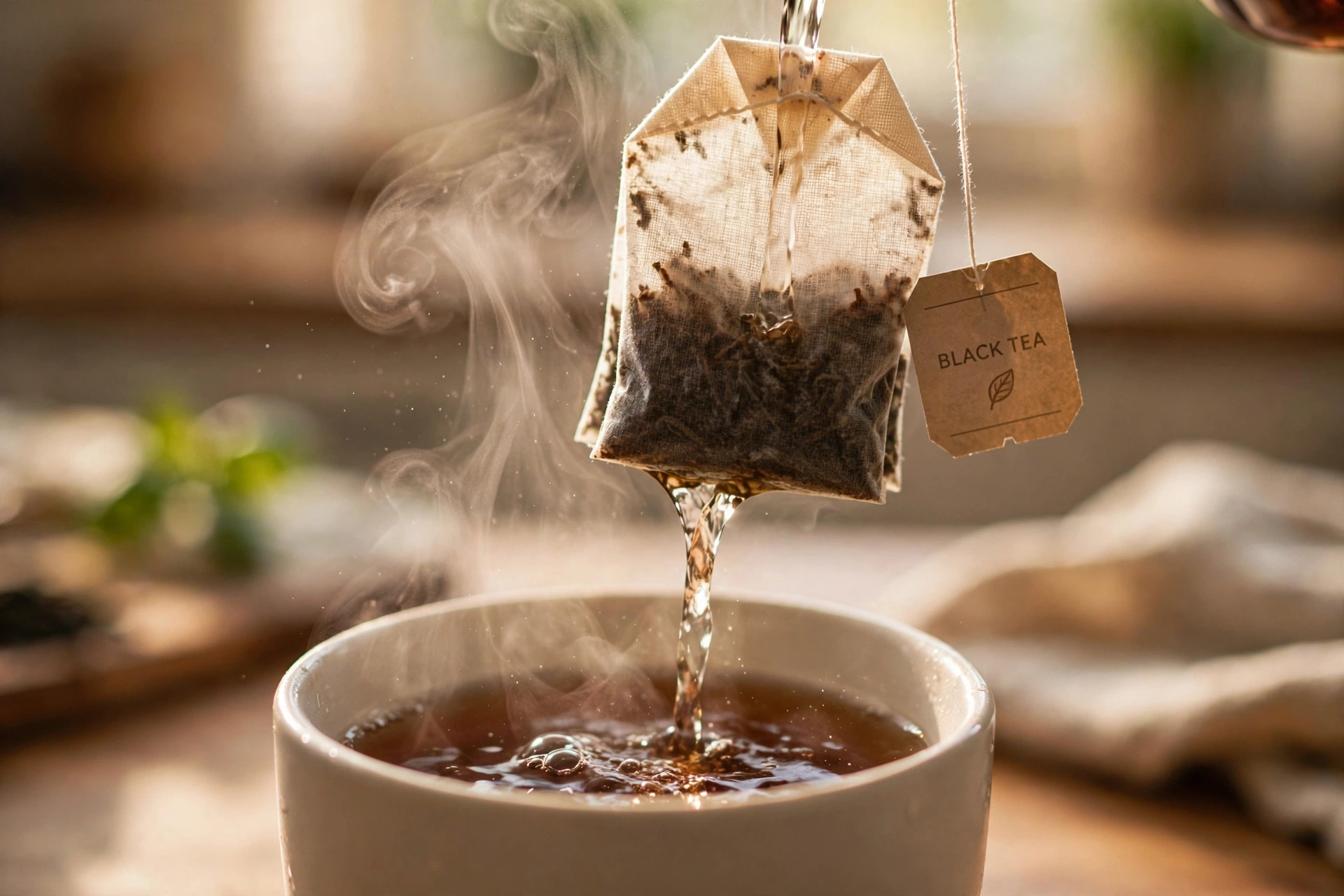
For millions of people, the day does not really start until a tea bag has been dropped into hot water. It feels like one of the simplest and healthiest habits there is. A new study published in Nature suggests that ritual may come with an unwanted extra ingredient: hundreds, and in some cases thousands, of tiny plastic particles released into every cup from plastic tea bags.
Researchers tested products from 28 brands, brewing tea bags and loose tea under comparable conditions and counting the particles that ended up in the drink. The contrast was stark. Plastic tea bags released between 555 and 2,498 microplastic particles per cup, while loose tea released just 0.3 to 2.4 particles per cup. In other words, the packaging, not the tea itself, appears to be the main source.
What the Study Actually Found
The team looked at a wide range of commercially available teas, because tea bags are not all made the same way. Some are paper, some are a paper and plastic blend, and the smooth, silky pyramid-style bags that have become popular in recent years are often made largely from plastic polymers such as nylon or polyethylene terephthalate. When those materials meet near-boiling water, they can shed microscopic fragments.
Microplastics are generally defined as plastic pieces smaller than five millimetres, and many of the particles counted in studies like this one are far smaller than that, invisible to the naked eye. You cannot see them swirling in your cup, you cannot taste them, and a normal kitchen strainer will not catch them. That invisibility is a large part of why the findings have attracted so much attention.
The range in the results also matters. Not every plastic tea bag performed the same, which suggests that the type of plastic, the way the bag is sealed, and how long it is steeped all influence how many particles are released. A quick dip is likely to differ from leaving a bag in the pot for ten minutes, and repeatedly squeezing a bag against the side of a cup may not help either.
Should Tea Drinkers Be Worried?
Scientists are careful on this point, and readers should be too. Finding particles in a drink is not the same as proving that those particles cause a specific illness at the levels found. Research into what microplastics do inside the human body is still developing. Particles have been detected in a range of human tissues in other studies, and laboratory work is exploring possible links to inflammation and other effects, but there is not yet a settled scientific answer on the health risk from an occasional cup of tea.
What this study does provide is a clear comparison. Loose tea, brewed in the study, came with a dramatically lower particle count than tea from plastic bags. That gives consumers a practical choice that does not depend on waiting for the health science to catch up. If you want to reduce your exposure, the route is unusually straightforward compared with many other sources of microplastics, such as air, dust and drinking water, which are much harder to avoid.
Practical Steps You Can Take Today
The easiest swap is loose-leaf tea with a stainless steel infuser or a reusable strainer. It takes barely a minute longer, often tastes better because the leaves have room to expand, and according to this research it cuts the particle count to a tiny fraction of the plastic bag figure. Many readers who follow the guides on Tech Waterfall already enjoy experimenting with kitchen gear, and a good infuser is an inexpensive place to start.
If you prefer bags for convenience, check what they are made from. Some brands now use paper, cornstarch-based materials or other compostable fibres, and many say so clearly on the box. Avoid the shiny, silky pyramid bags if you cannot confirm their material, let boiled water cool for a minute before pouring, do not steep for longer than the packet recommends, and avoid squeezing the bag hard.
It is also worth keeping the finding in perspective. Tea is still a drink associated with plenty of positives, and nobody is suggesting that one cup causes harm. The value of research like this is that it turns an invisible issue into a measurable one, across 28 real brands that people actually buy, and gives shoppers information they can act on.
The Bigger Picture
Tea bags are a small part of a much larger conversation about how plastic has woven itself into everyday food and drink preparation, from bottles and containers to coffee pods and food packaging. Each study that puts a number on a familiar habit helps build a clearer picture of total exposure, and helps regulators and manufacturers decide where changes would make the biggest difference.
For now, the takeaway is simple. Your tea itself is fine. It is the bag worth a second look, and thanks to this research, switching to loose tea or a plastic-free bag is one of the easiest microplastic reductions anyone can make.
